

The Shifting Landscape of the Commercial Property Market
-
 by Dan Smith
- 31st January 2022
- Blogs, Property News, Uncategorised
- 0


The Shifting Landscape of the Commercial Property Market
There is no doubt that the recent global pandemic has had widespread impacts in every corner of society. Industries based on interaction, community and travel have been halted by challenges in the form of local lockdowns, movement bans and Zoom meetings. Other industries have exploded, managing to harness the increasing cultural shift towards remote work, virtual interactions and online purchasing.
Dan S mith, director of M4 Property Consultants provides his thoughts on both the local and national commercial property market over the past 12 months and in 2022.
The commercial property market has seen its fair share of disruptions considering economic uncertainty, with many clients in the hospitality and retail sectors struggling to maintain business. Office spaces and manufacturing warehouses were also affected with shortages of staff due to repeated stay-at-home orders. We have observed several impacts that recent years have had on industries, businesses, and how the use of commercial property is changing.
The High Street
Demand for specific types of commercial properties is changing, with many organisations utilising the global pandemic to shift their business from a traditional retail model to a blended or even fully e-commerce-based business model. The pandemic accelerated the move towards online stores for many new and existing businesses, as customers were removed from high streets and embraced online purchasing.
An example from the UK high street was the £330m purchase of the Topshop and Miss Selfridge brands by online fashion retailer Asos, closing the majority of retail stores and trading the brand names almost exclusively through e-commerce.
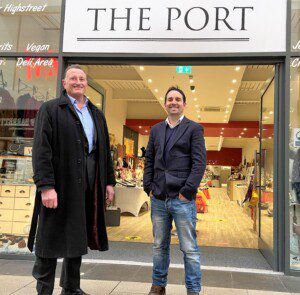
With the falling demand for retail spaces from larger companies, opportunities are now emerging for smaller, independent businesses to take the place of these e-commerce giants and bring their trade to the high street. Newport Now BID has appointed M4 Commercial Property Consultants to work with local businesses, understand their requirements and help welcome them into Newport city centre. You can read more about this partnership, and how M4 are helping local businesses secure commercial, high street properties in our recent blog post here.
Increasing Demand for Warehousing
In 2022, the commercial property market is set to continue leaning towards e-commerce stores, with more businesses moving away from the high street retail space in favour of properties that better facilitate online trading. The Office for National Statistics reported that the share of online retail, as a proportion of total retail sales, nearly doubled in the two years between January 2019-21, increasing from 19.3% to 36.3%.
Demand for warehousing spaces is therefore predicted to continue to rise as growing numbers of businesses seek to integrate e-commerce retail into their strategy. A growing number of warehousing properties are being developed as pick and pack distribution centres, hosting a number of businesses to enhance their order assembly and delivery processes. These distribution companies provide opportunities for smaller businesses to integrate online retail into their business strategy, without requiring further investment in dedicated commercial spaces.
 In October 2021, we helped a long-standing client of ours find and secure the lease for a 114,000 sq ft unit on Avondale Industrial Estate in Cwmbran which they will be using for their expanding warehousing and online fulfilment business.
A Fluid Office Dynamic
Hybrid working patterns are now commonplace, with employees increasingly demanding a flexible approach to where they work. The first UK lockdown in March 2020 proved to many that working from home was not only possible but also highly rewarding.
Removing geographical limitations to the work force and increasing flexibility in the personal lives of employees all whilst protecting their health and safety.
In 2022, many businesses have returned to working in person or are now adopting hybrid working patterns. Employees are demanding to work remotely when necessary to continue working whilst reducing health risks. The Chartered Institute of Personnel and Development (CIPD) found that 40% of employers expect more than half of their staff to work remotely on a regular basis. Whilst the threat of stay-at-home orders still lingers into the new year, employers must follow suit and accommodate hybrid working with both new technologies and office design.
New Office Design
Commercial office spaces must, like the workforce, be adaptable to changing work patterns. Wide, open office spaces that promote distancing whilst providing the space for interaction between employees are increasingly in demand. Clients now seek a space that offers a blend between a collaborative open design and a traditional office environment for individual, ‘isolated’, work. The 2022 office needs to facilitate these changes in work practices, and is most apt in the growing trend of dynamic office spaces that move to suit the changing needs of each working day.
Demand for premium office space will rise, as businesses want to turn their in-person work into more of an occasion with a welcoming office able to tempt employees out of their homes. If the demand for traditional office space falls, owners may need to redesign their buildings to stay profitable. If demand falls for offices, the space may be more profitable as a shop, café, office gym or communal space, for example.
Commercial property can make a significant impact on your business. Through building a relationship with your company, understanding its influences and strategy, we can insure that your commercial strategy property is set to have a positive impact on your business through the services that M4 Property Consultants provide.
If your business needs help with an existing property or finding a new commercial space, please give us a call on 01633 740 740 or email [email protected].
